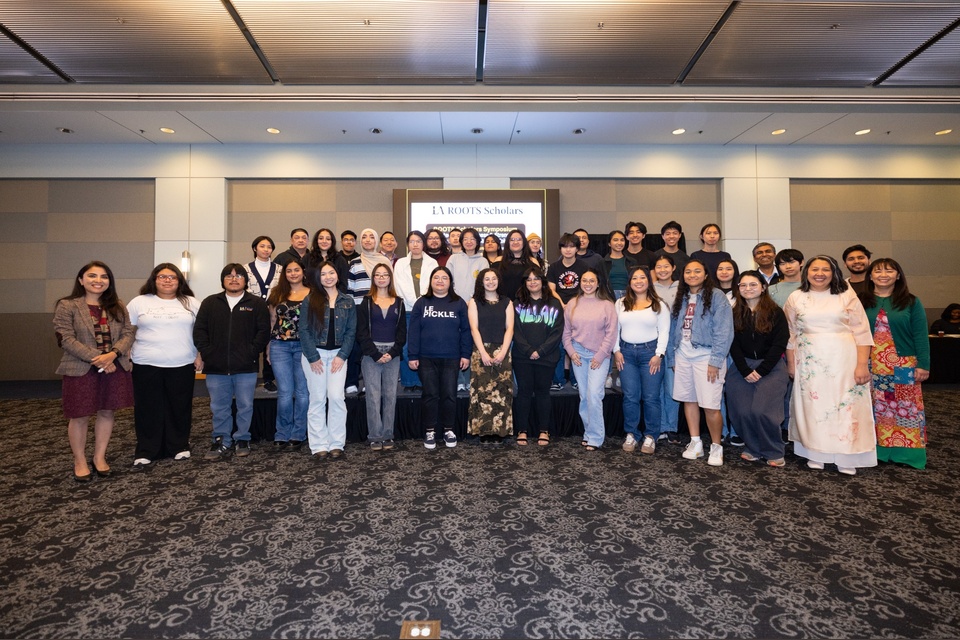
More than 100 students, faculty, staff, and administrators gathered at Cal State LA on Thursday, Nov. 6, for a fall symposium, “Rooted in Togetherness and Strength: Elevating AANHPI Student Voices,” in the Golden Eagle Ballroom.
Hosted by the Rooted in Togetherness and Strength (ROOTS) Scholars Program at Cal State LA, the event brought the campus community together to explore and deepen understanding of the stories of Asian American, Native Hawaiian, and Pacific Islander (AANHPI) students.
“The primary objectives of the symposium were to raise awareness within the campus community about the experiences and needs of AANHPI students, and to invite members of the campus community to work together with us to better support AANHPI and other students,” said Trinh Pham, co-director of the ROOTS Scholars Program.
The symposium opened with introductions from Andre Ellis, associate vice president for diversity, equity, and inclusion, and welcome remarks from Provost Heather Lattimer, leading to a presentation by Pham and co-director Shikha Upadhyaya, who offered an overview of the ROOTS Scholars Program.
The ROOTS Scholars Program provides spaces for learning, sharing knowledge and experiences, connecting, and exploring intersectional identities. It supports student academic success and fosters an inclusive environment that addresses the needs of AANHPI students and the broader campus community. The program is open to anyone, regardless of race, color, national origin, and sex.
The program is supported by a state grant awarded to Cal State LA through the California State University’s AANHPI Student Achievement initiative, which is funded by Assembly Bill 190. The grant supports efforts to enhance culturally responsive programming and improve retention and graduation outcomes for AANHPI students and other underrepresented students.
The presentation also included a discussion of student demographic and success data to highlight subgroup differences rather than treating AANHPI students as a monolith.
“By looking closely at disaggregated student data and subgroup differences, we can better understand how to serve our students and challenge stereotypes,” Pham said. “These insights help address the model minority myth and underscore the importance of recognizing the diversity of AANHPI student experiences.”
According to focus groups and climate survey data, model minority expectations, especially surrounding academic performance and career paths, create emotional pressure and can limit students’ sense of belonging and autonomy.
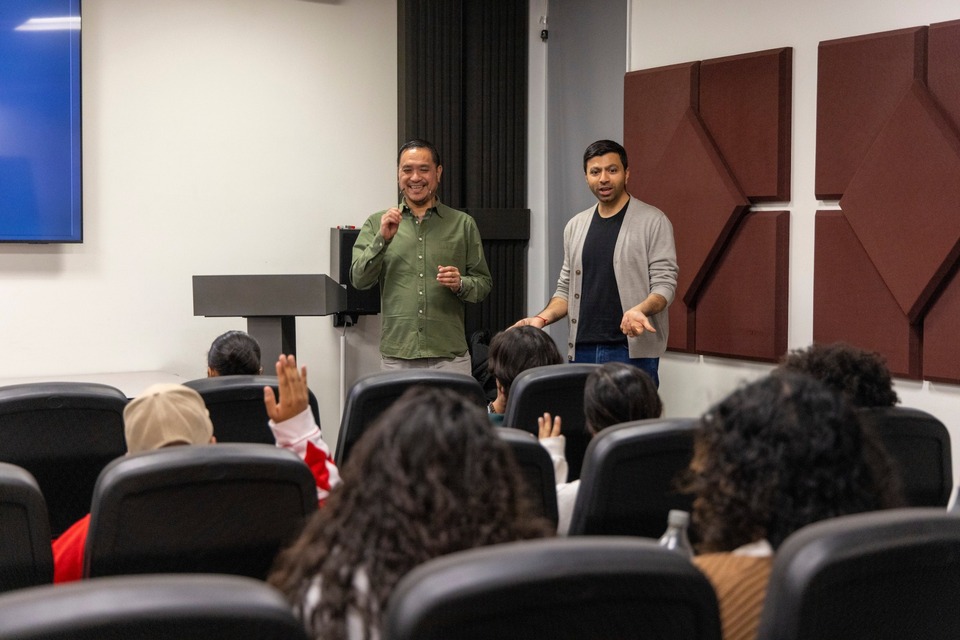
A central focus of the symposium was hearing directly from students as they shared their experiences and offered feedback on how the university can better support them. Student speakers Maira Abbas, a kinesiology major, and Kezia Mambo, a communication disorders major, reflected on their personal journeys.
Abbas, who enrolled at Cal State LA as a first-time freshman, said the program has played a key role in helping her find community on campus.
“I’m a first-generation college student, and sometimes navigating college life can be scary—but it has helped me become more independent,” she said. “What I appreciate about this program is that it centers on Asian identities and creates a space where I feel like I belong. When I attended the orientation, I met people with similar backgrounds and even made a new friend.”
For Mambo, a commuter student, an email invitation was what first sparked her interest in joining the program. She shared that the message resonated with her background and values.
“In my senior year of high school, I founded the Southeast Asian Community Culture Club to give voice to students who don’t often see their cultures represented,” she said. “I felt a strong connection between that club and the ROOTS program. After joining, I immediately appreciated the flexibility, the variety of events, and the overall support of the faculty team.”
Following the student speakers, a panel discussion featured five other Cal State LA students who shared their insights and discussed the impact of the ROOTS Scholars Program.
The panelists included Alexander Guevara, communication studies major; Jordan Knoch, theatre arts–performance major; Elysse Yasuda, international business major; Betty Peng, pre-nursing major; and Sydney Nakasone, business administration major with an option in entrepreneurship.
Attendees also enjoyed lunch and participated in table conversations and a collective reflection on fostering inclusion and supporting AANHPI student success. For many students, the symposium offered a space to be seen, heard, and celebrated.
Through ongoing activities and gatherings like this symposium, the ROOTS Scholars Program continues to build community, amplify student voices, and strengthen a sense of belonging for AANHPI and all students at Cal State LA.
# # #
California State University, Los Angeles is the premier comprehensive public university in the heart of Los Angeles. Cal State LA is ranked number one in the United States for the upward mobility of its students. Cal State LA is dedicated to engagement, service, and the public good, offering nationally recognized programs in science, the arts, business, criminal justice, engineering, nursing, education, and the humanities. Founded in 1947, the University serves more than 22,000 students and has more than 260,000 distinguished alumni.