Los Angeles Economic Equity & Action Forward (LEEAF), in partnership with Cal State LA, has recently released a final report proposing a new community council to serve unincorporated East Los Angeles. Guided by feedback from 303 East LA residents who shared their voices in a series of six resident meetings, along with hundreds more who offered insights online and through smaller conversations, the report outlines how to design a community council that meets the expressed needs of the community.
Community councils and the question of representation
Despite having more than 110,000 residents and a history of cultural and political leadership, East LA remains the largest unincorporated community in the country. Many services are provided by Los Angeles County, but no representative body answers solely to residents.
In 2025, county staff approached the LEEAF community-engagement program to explore a potential partnership, in response to a motion by Los Angeles County Supervisor Hilda L. Solis, to explore whether a Town Council, Municipal Advisory Council, or another representative body could meet the needs of the East LA community.
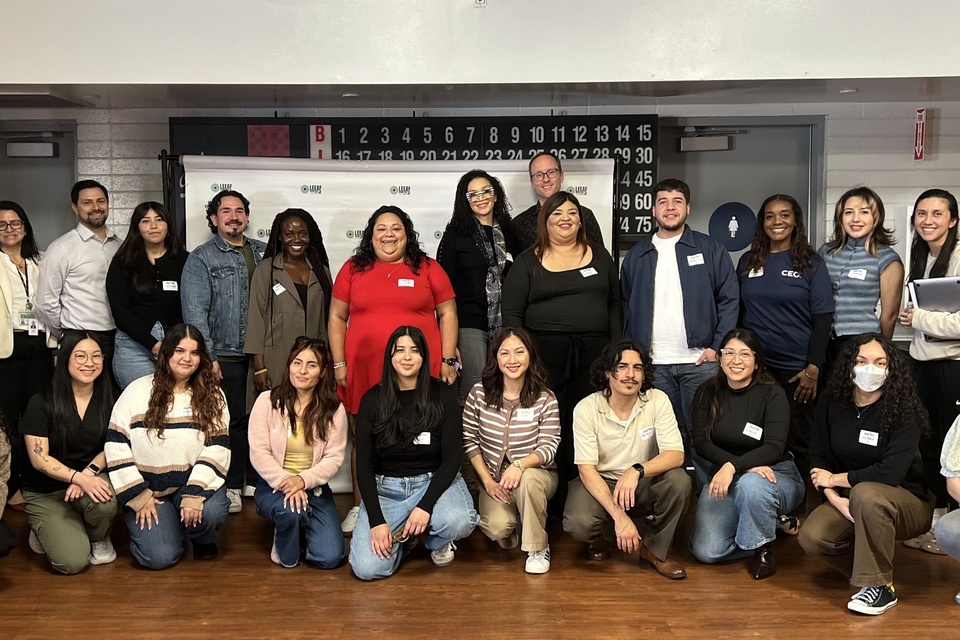
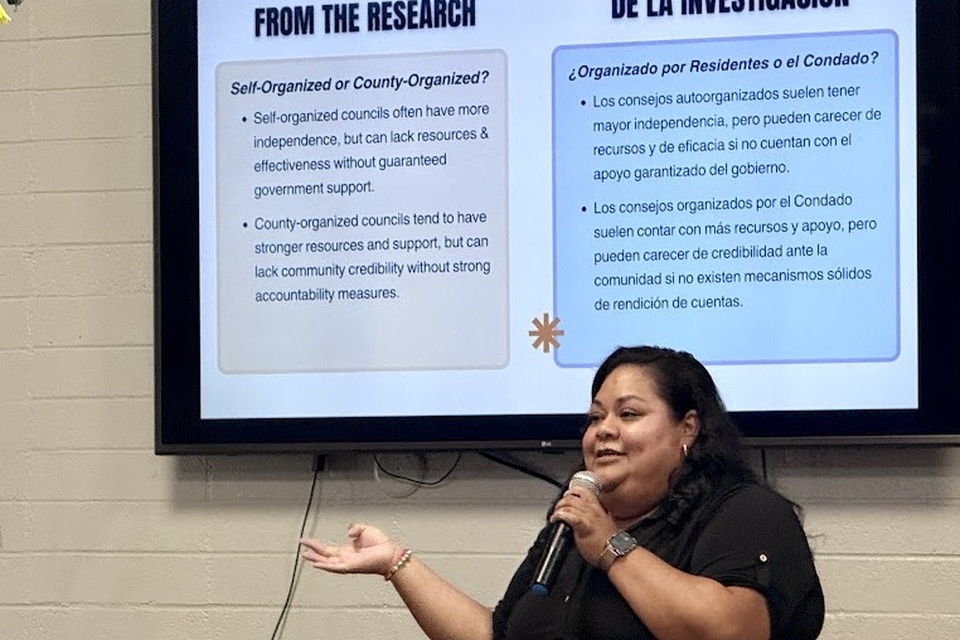
LEEAF worked with county and district staff alongside community stakeholders to lead the East LA Community Forums, an action-research project anchored by a series of resident meetings that elevated East LA residents’ voices to help guide the political future of their community. Crucial to the effort was a team of Cal State LA student researchers, who documented residents’ perspectives at the meetings, organized and analyzed hundreds of pages of notes, and researched 27 community council systems across the country to develop recommendations for East LA.
Founded at Cal State LA, just a few blocks north of unincorporated East LA, LEEAF is led by faculty and staff with close personal ties to the East LA community spanning decades. LEEAF Executive Director Elianne Rodriguez, a graduate of Cal State LA, emphasized that these forums align with LEEAF’s broader mission, “Centering community voices and intentionally reaching beyond the usual participants to bring historically disengaged perspectives into the room. Because those perspectives are not optional, they are essential.”
Honoring community voices
Traditional large town hall meetings are often dominated by a few loud voices. From the start, LEEAF worked with stakeholders to design an approach that highlighted small-group conversations. A table facilitator guided each group to help ensure that every voice is heard.
Marla Parker, an associate professor of political science at Cal State LA, shared the commitment behind this approach: “Inclusive facilitation was at the heart of the project. Without an approach that honored the variety of wisdom, history, experiences, perspectives and desires, the sessions would not have been as rich or insightful. Great care was taken to ensure that each facilitator kept inclusivity at the heart of their engagement.”
To open this opportunity to as many East LA residents as possible, LEEAF worked with teams of local residents who knocked on more than 1,900 doors, spread the word at 55 community events, and created mutual partnerships with over 40 community organizations, local businesses, parks, and neighbors. The team amplified in-person outreach with social media, email, text messages, and phone calls.
“Including new voices was key to an equitable outcome for these forums,” noted LEEAF Research Team Lead Jorge Valenzuela-Felix, a Cal State LA alumnus who earned his M.A. in sociology in 2022. “The fact that 46% of in-person attendees were new to political engagement has already resulted in key insights regarding community issues and how community members want to see an advisory body unfold in East LA.”
Next steps for unincorporated community representation
Now that LEEAF has published its final report, the LA County Chief Executive Office will write its own report in response, highlighting next steps for action. The county’s report is expected in early November, just after the election of a new county supervisor serving East LA and the rest of District 1.
The report contributes to countywide conversations about governance and representation. The LEEAF team has identified 31 unincorporated communities across Los Angeles County with at least 10,000 residents each. These communities collectively represent more than 800 thousand people who stand to benefit from a unified, countywide approach to community councils.
Dmitri Seals, a former Cal State LA sociology faculty member who now works full time as LEEAF’s associate director, shared that the LEEAF team is “committed over the long term to uplifting East LA community perspectives on the political systems that can deliver the accountability and transparency they deserve.”
LEEAF stands for equity led by communities. Its work includes the reports Listening to the Businesses of East LA and How Small Businesses and Communities Adapt to Immigration Raids, building on the deep personal ties to East LA.
For more on LEEAF’s approach to community-led action research, please visit the FAQ webpage. To learn more about its latest project, please visit the East LA Community Forums website.