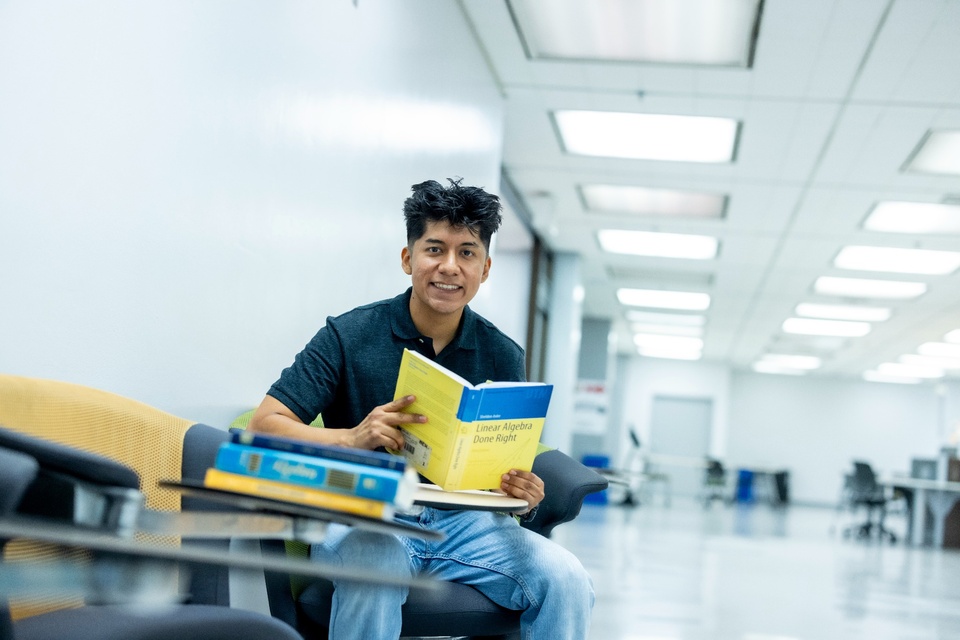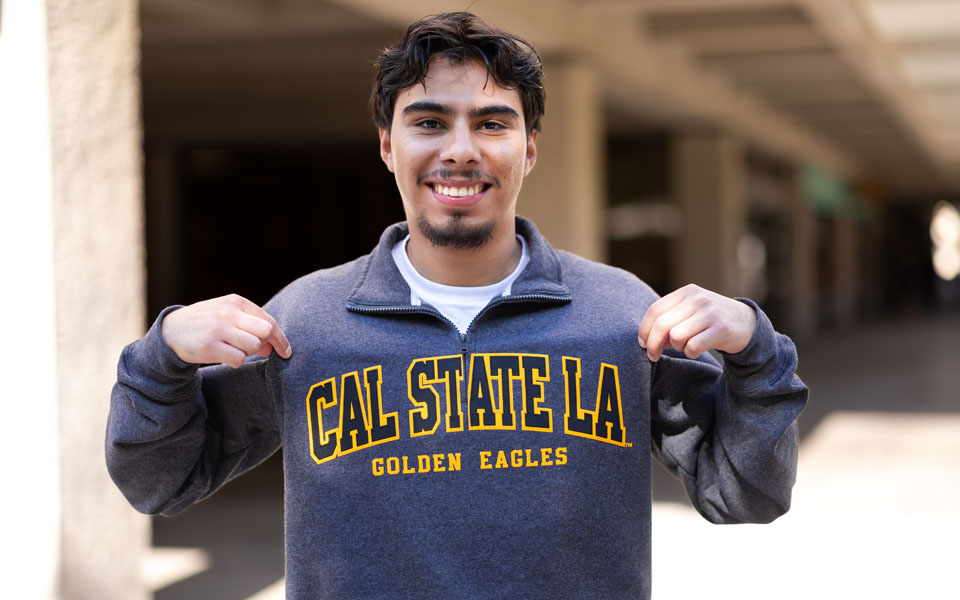
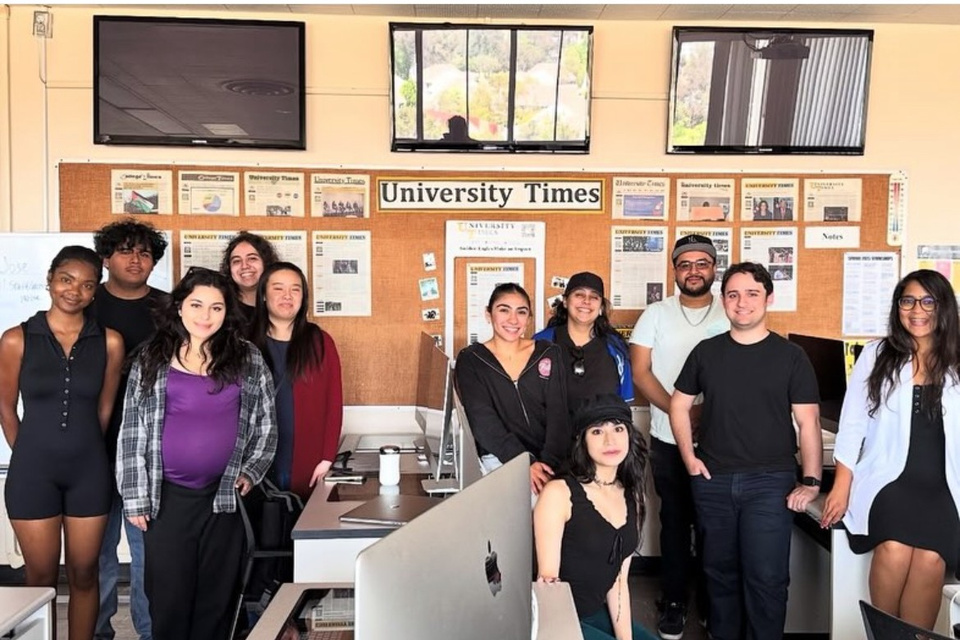
The California Community News initiative connects journalism education with community reporting, giving students professional experience while helping local news outlets. For more details, please read the full press release.
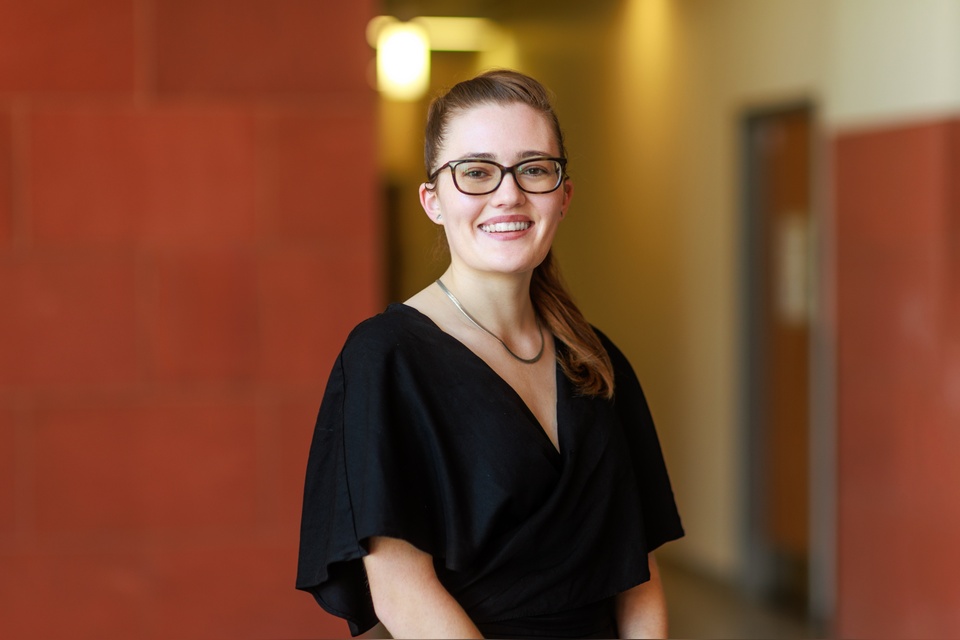
As a South Los Angeles native, Kara Carrell knows firsthand that some of the issues affecting her community don’t always make headlines.
So, when she enrolled in a community journalism course at Cal State LA that tasks students with reporting on local neighborhoods, she knew exactly what she wanted to cover: the lack of access to fresh, affordable food. Published by Cal State LA’s student-run publication, The University Times, Carrell’s work shed light on the struggles of people who live in food deserts and have to rely on food from convenience stores and fast-food chains.
“It’s something that I looked into and noticed South L.A. was struggling with before I even joined the class,” Carrell said.
Across the nation, issues from local communities are often underrepresented by mainstream news outlets, with an increasing number of Americans living in news deserts, or communities with limited or no access to local news.
Meanwhile, the number of journalists who can fill these gaps in coverage has been dwindling. In California alone, more than 12,000 local journalists have lost their jobs since 2002, according to the nonpartisan/nonprofit Rebuild Local News coalition.
California State University student journalists like Carrell are an integral part of closing these gaps. Through the California Community News (CA-CCN) initiative, CSU students are gaining hands-on journalism skills by reporting on their local communities. The program was launched last year with support from the Center for Community News at the University of Vermont, who also helped the State University of New York (SUNY) system establish a community news program, and was recently awarded additional funding from the Lumina Foundation.
“These investments go a long way toward supporting and training student journalists, while ensuring that communities all over California have access to local news that keeps them informed and provides a reliable source of civic information,” said Gina Baleria, associate professor of media at Sonoma State and coordinator of the CA-CCN. “In the wake of the loss of so much local news coverage in recent years, the success of this project is critical.”
Funding will help support journalism programs across the CSU that engage students in local news reporting, such as the Community News course at Cal State LA, taught by Associate Professor of Journalism Julie Patel Liss. Students in the course focus on a particular neighborhood or area of the city—often where they themselves reside—attending neighborhood and city council meetings to find out about public issues the community is facing.
“They live in these communities, so they’re really well equipped to cover them,” Patel Liss said. “They’re not parachuting in like some of our mainstream media partners would. They’re in there; they know what issues are affecting their neighbors, the small business owners, their own families.”
As many of these stories are ones that have rarely or never been covered, Patel Liss said they often get picked up by local media outlets who also pay students for their work.
Other CSUs have established their own models for engaging students in local news. At Cal State Fullerton, students are sent to work at existing community newsrooms such as Voice of OC, a nonprofit newsroom that has been a longtime internship partner for the campus.
San Francisco State’s journalism program particularly emphasizes community and ethnic media, partnering closely with local media outlets. The Audio Journalism class creates student-produced radio features that air on KQED Public Radio, and the Community Media class works with rotating ethnic media partners, which have included El Tecolote and the Oakland Post. Partners including KQED Public Radio and the San Francisco Chronicle also provide paid internships exclusively for SF State students.
And at Fresno State, internship agreements with local and regional organizations enable students to spend a semester creating content for outlets like KVPR Valley Public Radio, The Sun-Gazette, The Mid Valley Times, The Madera Tribune and Fresnoland.
Currently, 17 CSUs are involved in the CA-CCN initiative, providing various opportunities for students to gain hands-on journalism experience, engage with local media organizations and contribute to their local news landscape. CA-CCN seeks to expand such opportunities to all 22 universities and foster cross-collaboration between student reporting programs in the CSU system that produce local news as part of their coursework.
The new funding from CCN and the Lumina Foundation will also go toward hiring professional editors to work alongside faculty to guide students through the reporting and publication process, easing the workload for professors who must balance these efforts with teaching and grading responsibilities.
As the initiative grows, CA-CCN hopes to bring on state and regional coordinators to strengthen connections among journalism and media faculty across campuses, facilitate resource sharing and create opportunities for collaboration. These could include developing online courses open to students across the CSU system, allowing more students to participate in community reporting regardless of their home campus.