Cal State LA is joining a major statewide initiative to monitor biodiversity and better understand how climate change and urban development are reshaping the ecosystems across California.
The project, supported by $2.5 million from the California Department of Fish and Wildlife (CDFW), will expand the Sentinel Sites for Nature, a coordinated network of long-term biodiversity monitoring locations across the state. The effort is led by Cal Poly Humboldt and the U.S. Geological Survey California Cooperative Fish and Wildlife Research Unit and brings together researchers from 17 California State University (CSU) campuses.
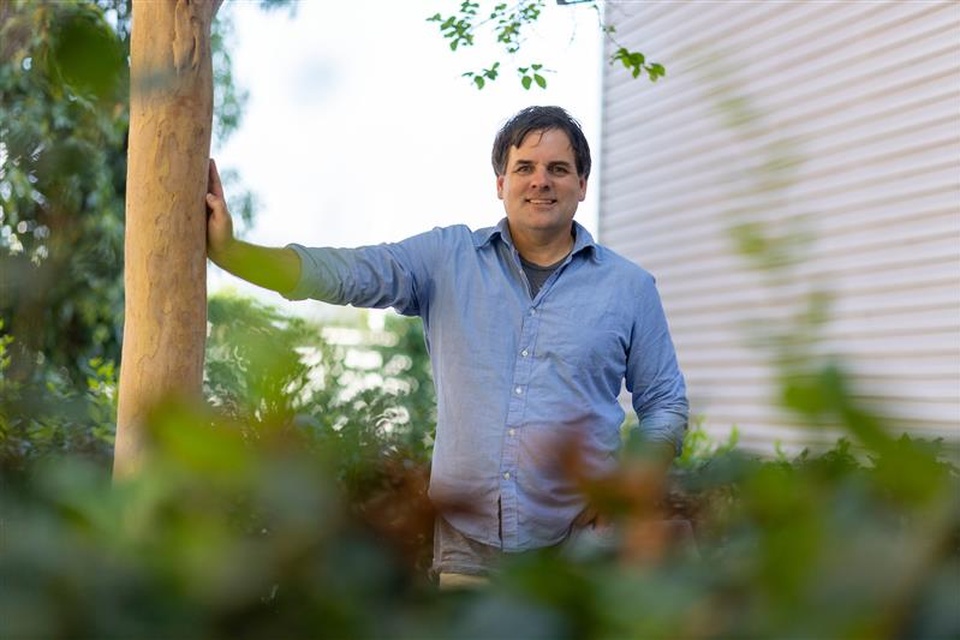
Cal State LA Professor Eric Wood, co-director of the university’s Urban Ecology Center, is a co-investigator on the grant and will lead the Southern California portion of the research.
Wood’s lab will establish two long-term biodiversity monitoring sites in the Los Angeles region, including one at Ascot Hills and another on the Cal State LA campus. These sites will use wildlife cameras, bird and bat acoustic recorders, and time-lapse cameras to track vegetation and seasonal environmental changes.
Together, these tools will allow researchers to document how wildlife communities respond to environmental change over time—from natural areas to the urban core of Los Angeles. A full-time project manager based in Wood’s lab will coordinate equipment deployment, data collection, and student training across the Southern California sites.
“Cities are increasingly important places for biodiversity research,” said Wood, professor of ecology in the Department of Biological Sciences. “By studying wildlife in Los Angeles, our students can help us understand how nature persists in urban environments while contributing data to one of the largest coordinated biodiversity monitoring networks in California.”
Despite its dense urban landscape, Los Angeles is one of the most biologically diverse regions in the state. Researchers expect to document mammals such as coyotes, raccoons, skunks, and bobcats, along with diverse bird communities and a variety of bat species.
Monitoring locations will include habitats such as coastal sage scrub, chaparral, oak woodland, and seasonal riparian areas. Long-term data collected at the sites will help scientists better understand how wildlife responds to urbanization, drought, climate variability, and habitat fragmentation—environmental challenges that are particularly relevant across Southern California.
This collaborative monitoring program supports California’s 30×30 initiative, the state’s goal of conserving 30% of coastal waters and lands by 2030. By expanding long-term ecological data collection across diverse ecoregions—from coastal redwood forests and Central Valley working landscapes to Southern California’s urban ecosystems—the Sentinel Sites for Nature network provides critical information to guide science-based conservation and policy decisions.
CDFW has established 39 Sentinel Sites on department-owned properties, while the University of California Natural Reserve System is developing 37 additional sites. With the addition of CSU campuses—including Cal State LA—the network will expand to more than 110 monitoring sites statewide.
The initiative will also provide significant hands-on learning opportunities for Cal State LA students. Students will help deploy and maintain monitoring equipment, assist with data processing, and participate in analyzing wildlife observations collected across the statewide network.
According to Wood, because the Sentinel Sites for Nature network spans universities and natural areas across California, Cal State LA students will gain experience working with standardized monitoring protocols and large shared datasets—valuable training in field ecology, biodiversity monitoring, and data science.
This work will also connect closely with the Urban Ecology Center in the College of Natural and Social Sciences at Cal State LA, expanding opportunities for students to study biodiversity in cities and engage directly with environmental challenges across the Los Angeles region.
In addition to Cal State LA, participating CSU campuses include Cal Poly San Luis Obispo; CSU Bakersfield; CSU Channel Islands; CSU Dominguez Hills; Fresno State; Cal State Fullerton; Cal State Monterey Bay; Cal State Northridge; Sacramento State; Cal State San Bernardino; San Diego State; San Jose State; Cal State San Marcos; Sonoma State; and Stanislaus State.
This project strengthens Cal State LA’s role as a hub for urban ecological research and advances long-term ecological research and workforce development across the state.
Have a story to share?
California State University, Los Angeles is the premier comprehensive public university in the heart of Los Angeles. Cal State LA is ranked number one in the United States for the upward mobility of its students. Cal State LA is dedicated to engagement, service, and the public good, offering nationally recognized programs in science, the arts, business, criminal justice, engineering, nursing, education, and the humanities. Founded in 1947, the University serves more than 22,000 students and has more than 260,000 distinguished alumni.