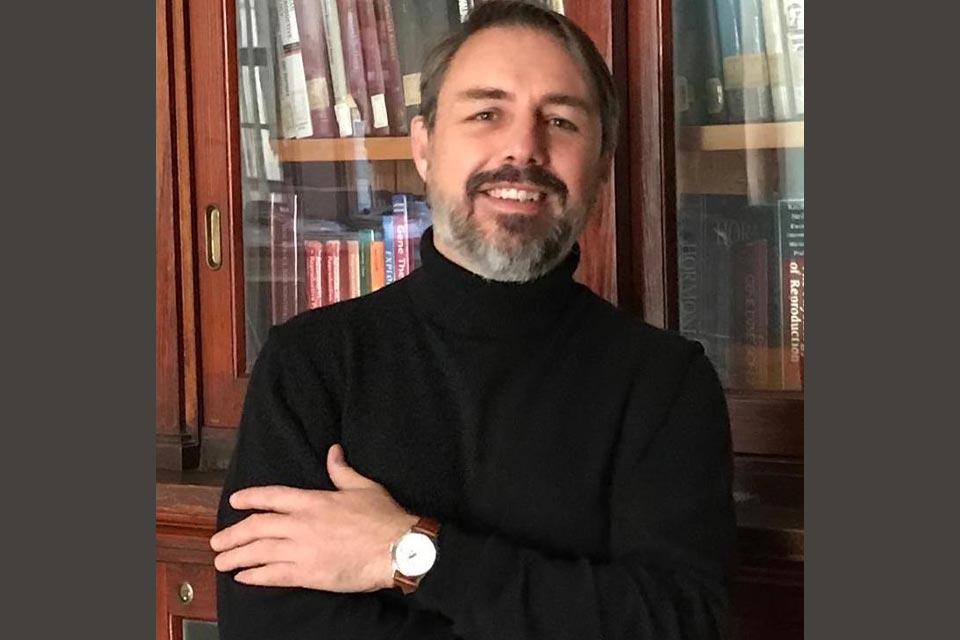
Long before Cal State LA was recognized as No. 1 in the country for upward mobility, David Glyer knew the value of the education he and his family received while pursuing their degrees.
Glyer attended what was then called California State College, Los Angeles, as an undergraduate from 1968 to 1972. During his freshman year, he and three of his five siblings, along with their mother, were enrolled at the college at the same time. The youngest sibling would matriculate and graduate from Cal State LA years later. (Glyer’s eldest brother attended Cal Poly San Luis Obispo and his sister later transferred to and graduated from San Jose State University.)
Glyer credits the university for their individual successes.
Opportunity Insights at Harvard University in 2022 ranked Cal State LA as the top university nationally for upward mobility, a measurement of how effectively colleges enroll economically disadvantaged students and graduate them into careers that pay well. Additionally, the California Mobility Index’s inaugural 2024 rankings of the state’s colleges placed Cal State LA at the top of its list.
“All of the kids [who attended Cal State LA] were able to reach that top quintile of income coming from the bottom one,” he said. “However, we were too early for that study, just a reflection of it.”
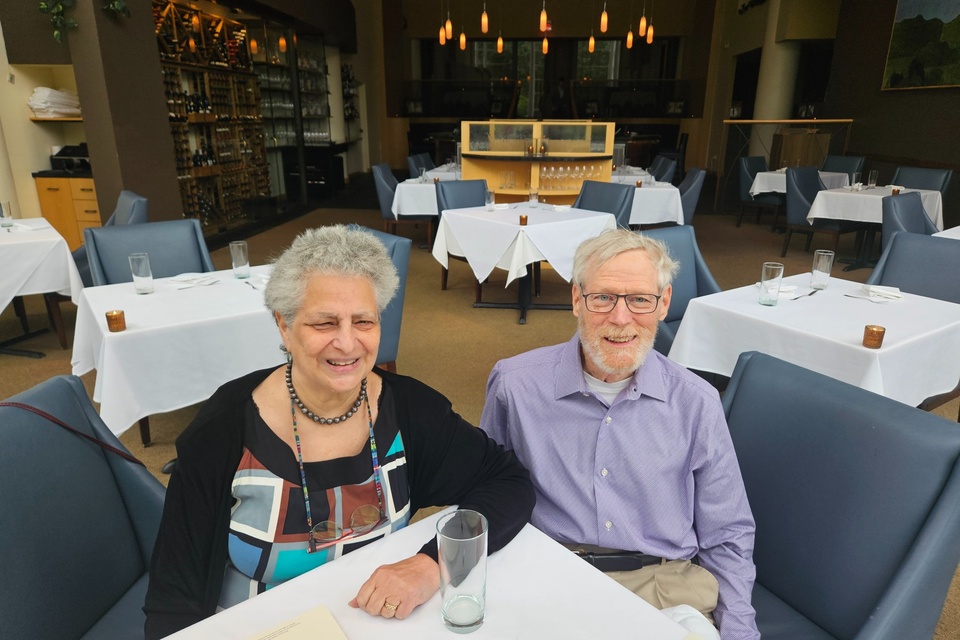
Glyer, 76, has not forgotten the impact the university had on his life. He and his wife, Vicki Bier, support Cal State LA through generous donations that Glyer hopes will assist students who, like himself, come from modest means.
“Cal State LA is successful in providing its student body with the tools, environment, opportunities, and motivation not only to succeed in school but to do so in life in ways that help give them more control of their future,” he said.
Glyer and Bier’s current and deferred gifts specifically benefit the Office for Students with Disabilities (OSD), which is committed to creating an inclusive, accessible, and equitable environment for all students.
“We are deeply grateful for David Glyer and Vicki Bier’s generosity and commitment to accessibility,” said OSD Associate Director Diana Pantoja. “Their gifts have made it possible for OSD to provide Aira visual interpretation services for students who are blind or have low vision and Aira American Sign Language for students who are deaf or hard of hearing, at no cost to them. By expanding access to these innovative services, they are helping remove barriers, foster greater independence, and create a more welcoming and inclusive campus where every student is given the opportunity to succeed.”
Glyer grew up in Alhambra as the fifth of six children to a minister and a housewife. The first five children were born within six years of each other, and finances on a minister’s salary were always tight.
Their father, James, presided over Alhambra Presbyterian Church from 1956 to 1968, and the family lived in a manse owned by the church about four miles away from Cal State LA.
Glyer and his siblings all worked part-time jobs to support themselves through college. His siblings all went on to graduate school and to successful careers that ranged from teaching to business and thoroughbred brokering. Their mother, Helen, earned her undergraduate degree in art and a master’s degree in art therapy, finishing a journey that had started 40 years earlier at Michigan State University and the Art Institute of Philadelphia.
Glyer, who was diagnosed with attention deficit disorder at an early age, began as a mathematics major but hit his stride when he switched to economics. He later earned his Ph.D. in economics at Claremont Graduate University and went on to teach at Trinity University in San Antonio, Oregon State University, and the University of Colorado Denver. He then joined Christensen Associates, an economic consulting firm, as a senior economist.
He and Bier have lived for more than three decades in Wisconsin, where they raised their two children. Bier taught industrial and systems engineering at the University of Wisconsin-Madison.
“She is a lot smarter than I am,” Glyer joked.
Bier attended Stanford University and the Massachusetts Institute of Technology, but the couple does not donate extensively to her alma maters because they “don’t need it,” said Glyer.
Instead, they have focused on Cal State LA.
“A lot of students are the first in their families to graduate from college,” Glyer said Cal State LA’s student population, 55% of whom are first-generation students. “These students are proud of their efforts and more motivated than the average student, both in school and afterward. By working hard, they make a better life for themselves and their families across generations.”
Glyer and Bier’s support of OSD stems from the difficulties their elder child encountered at the University of California, Santa Cruz (UCSC).
“It is difficult for students with disabilities to attend and succeed in college,” Glyer said. “I saw this with my eldest, who might have dropped out if it weren’t for the assistance they received.
“But that was at a UC school, with better funding and richer families to assist,” Glyer continued. “The Cal State LA Office for Students with Disabilities faces greater challenges with fewer resources than UCSC. That is why we switched to focus on Cal State LA. While an influx of funds is nice, continuity of funding leads to more effective use of resources and provides staff with greater security and resources that students can plan for.”
OSD empowers students with disabilities by providing individualized support services, reasonable accommodations, and advocacy to improve access to academic opportunities across campus.
Its primary services include assistive technology, alternative media, alternative testing, support for deaf and hard-of-hearing students, and note-taking.
“We feel fortunate to be in a position to help Cal State LA continue its efforts, and we feel fortunate to have such a place to help,” Glyer said. “Our plan and pledge are to continue our contributions.”
For more information about supporting Cal State LA through estate planning, please visit plannedgiving.calstatela.edu or call 323-343-3060.
Have a story to share?
California State University, Los Angeles is the premier comprehensive public university in the heart of Los Angeles. Cal State LA is ranked number one in the United States for the upward mobility of its students. Cal State LA is dedicated to engagement, service, and the public good, offering nationally recognized programs in science, the arts, business, criminal justice, engineering, nursing, education, and the humanities. Founded in 1947, the University serves more than 22,000 students and has more than 260,000 distinguished alumni.