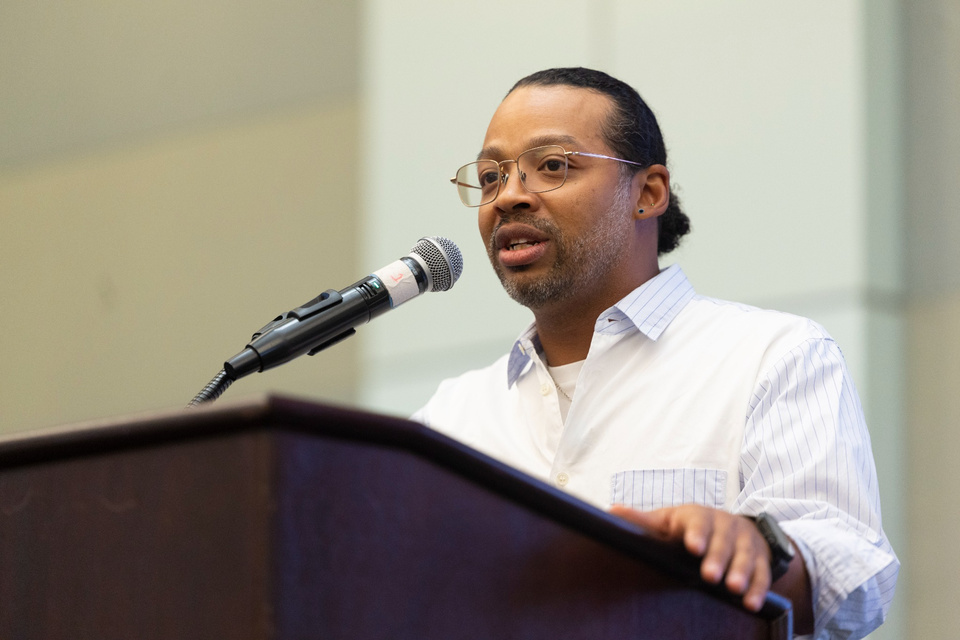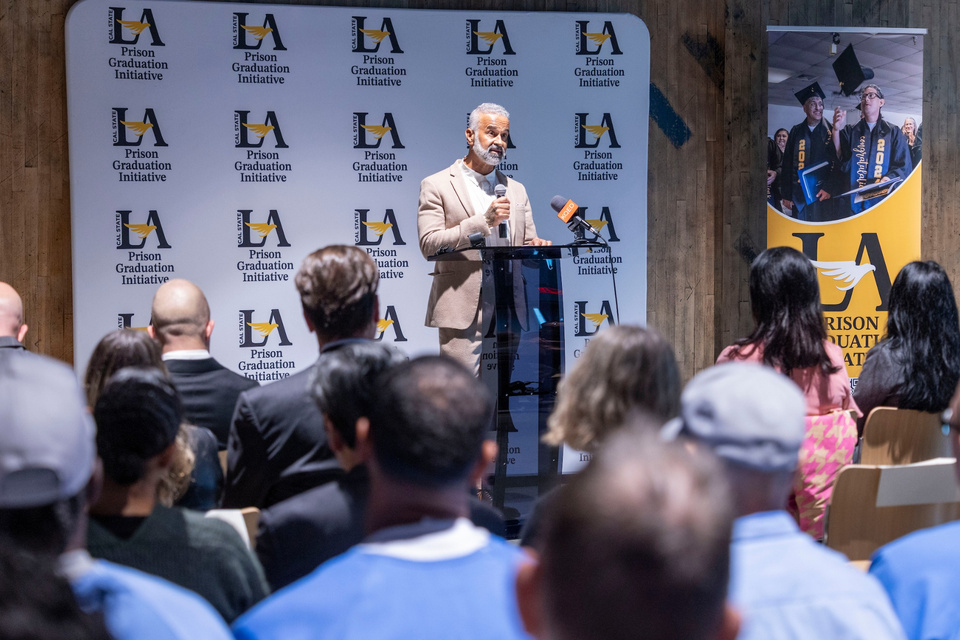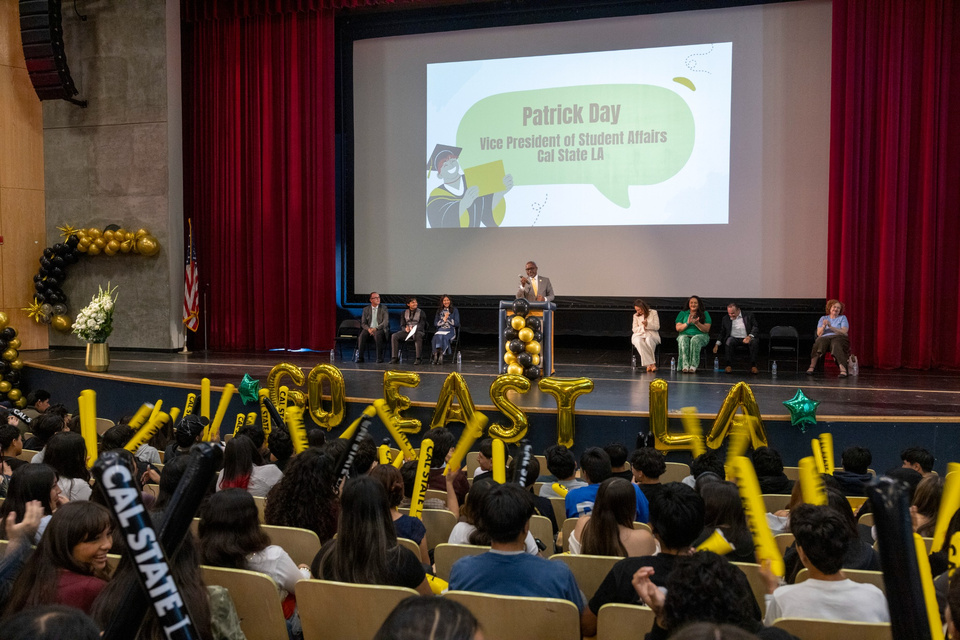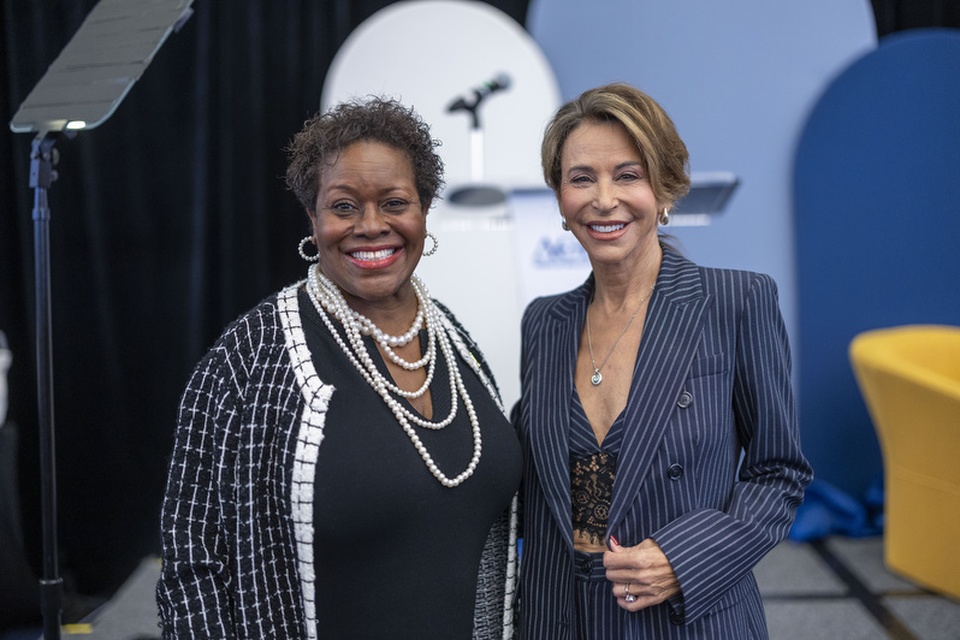
The Association for Ethnic Studies (AES) celebrated its 54th annual conference, themed “For the People: A Loving Defense for Ethnic Studies,” at Cal State LA, Oct. 15-17.
The three-day event was hosted by Cal State LA’s College of Ethnic Studies, the first such college established at a university in the U.S. in 50 years.
“We are proud to stand alongside so many who celebrate, support, and advocate for all that ethnic studies represents,” James Ford III, dean of the College of Ethnic Studies at Cal State LA, said in his welcome message in the conference program. “This conference brings us together to exchange ideas, advance scholarship, strengthen partnerships, and reaffirm the vital role of ethnic studies in education and society.”
The national conference welcomed a range of groups and individuals involved in ethnic studies, such as students, professors, community leaders, grassroots organizers, and even artists and poets. Paper and panel presentations, workshops, and interactive discussions addressed issues that different race, gender, and class-based groups face.
Ezekiel Joubert III, an associate professor of education in the Department of Advanced and Applied Studies at Cal State LA, served as co-chair of the AES conference. He believes that it takes cooperation and participation to maintain and sustain this loving defense of ethnic studies.
“The defense part too, we know that across the nation, there [are] lots of programs that are being closed,” Joubert said. “So ethnic studies programs, and women’s studies programs are under attack at the federal level.”
Joubert indicated that funding and other resources that would go toward diversity, equity, and inclusion initiatives, academic resources, research, and community leaders involved in ethnic studies work are being cut nationwide.
“And so, a part of it is sort of bringing people together to address this attack, but also to bring people together to build a way for us to engage, to imagine what ethnic studies can be like for the future,” he said.
The conference embraced this theme of unity. Guests presented different social questions, strategies, studies, and curricula that could work against the dilution of the voices within ethnic studies programs.
With a shared goal of social transformation, participants focused many conversations on multidimensional and cultural struggles.
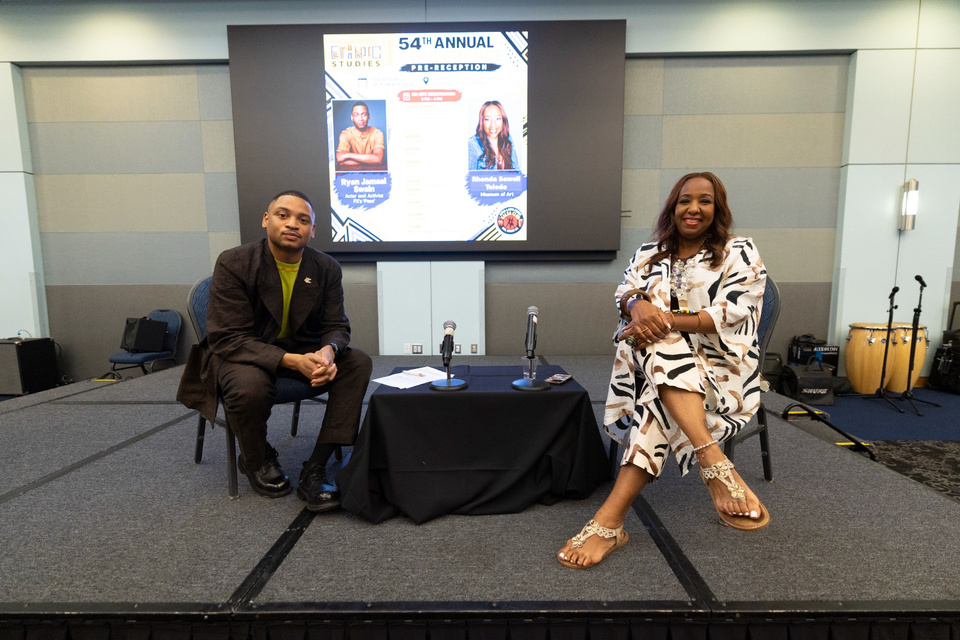
One highlight of the AES conference was an interactive panel discussion between actor Ryan Jamaal Swain, who played Damon Evangelista in FX’s “Pose,” and Rhonda Sewell, director of advocacy and external affairs at the Toledo Museum of Art.
They discussed several ideas surrounding black history, social conformity, social change, and their personal stories that led them to the lives they live today.
Love is more than a four-letter word, Sewell said. She described this loving defense as an action that fosters change. When someone fighting for change loves the people they fight for, they know the people they’re fighting for, which makes storytelling revolutionary, said Sewell.
According to Swain, mentoring people is important for advancing knowledge and literacy. He believes change happens when mentors help others discover their own truths and imagine their potential without barriers.
“I think there is an active possibility module of reminding yourself to imagine a world in which you don’t have to worry about anything standing in the way of you becoming who you’re destined to be,” Swain said.
An integral part of the conference was the collaboration between students and other guests. Many students, like fourth-year business major Sydney Nakasone, have been a part of Cal State LA’s College of Ethnic Studies programs for quite some time.
Nakasone added an Asian American studies minor to her academic plan for the purposes of self-discovery. She believes learning about her history and culture will help her to share experiences and understanding in life and business once she enters her career.
“Something I learned about in ethnic studies is that, like, we’re not alone,” Nakasone said. “We’re all fighting it together, and I think that’s really important that there’s a sharedness to it.”
Other students, like graduate student Mercedes Cao, were presenters at the conference. With a focus on Pan-African studies, Cao wants to be a professor, using academia as activism.
In her presentation, “Reclaiming the Wound: Psychological Healing and the Afrocentric Reimagining of Plantation Sites,” she examined Black history, how it’s portrayed in museums around the world today, and whether that portrayal can be reframed through an Afrocentric lens.
“I think [about] how necessary Black studies is, but how we have the information on what to do,” Cao said. “There are people who came before us today to use what our forefathers, foremothers, forepeople fought so hard for, to continue to fight hard for.”
Founded in 1972, AES is a nonprofit organization that provides an interdisciplinary forum for scholars and activists concerned with the national and international dimensions of race and ethnicity.